


Is Print Advertising Worth It for Neighbourhood Businesses?
Last Updated: 10 November 2026
Quick Summary
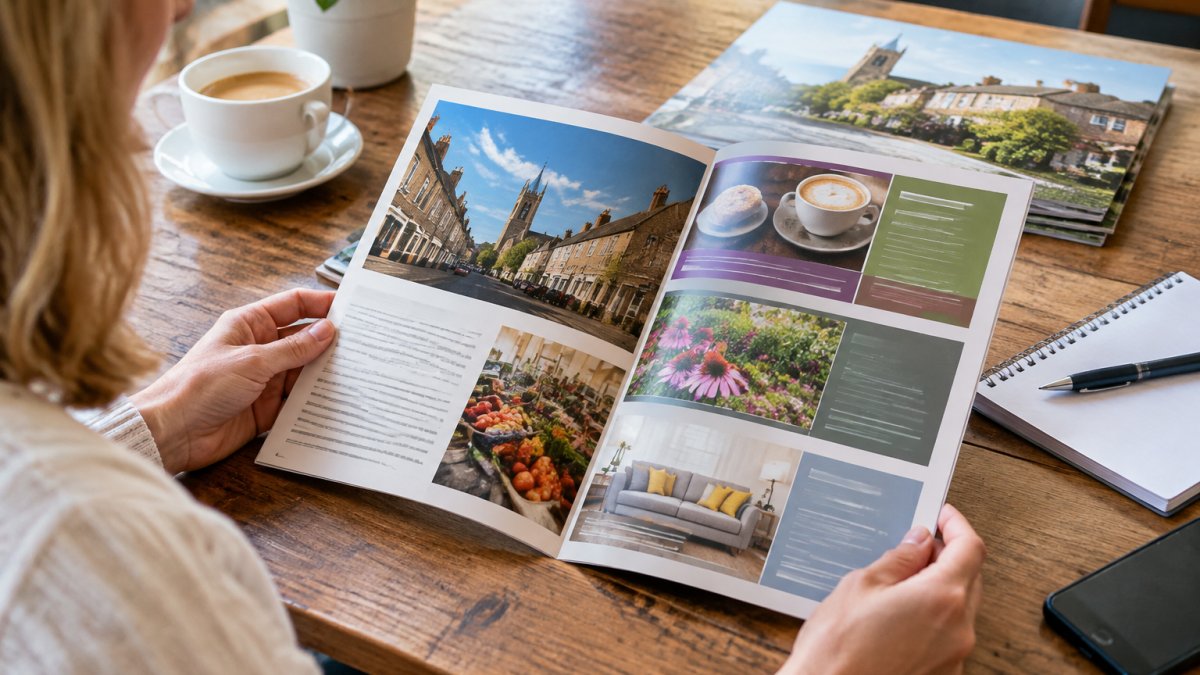
Print advertising is paid promotion in physical media such as community magazines, newspapers, leaflets and direct mail, and it works for neighbourhood businesses because it targets households in a defined area. A local magazine sits on a kitchen table and can be read more than once, giving your advert repeated chances to be seen.
Flyers suit quick offers and events, while community magazines build trust and brand awareness.
Set a budget you can repeat for at least three runs, because one drop rarely tells the full story.
Design around one headline, one offer and one clear way to respond.
Give each advert a unique voucher code or dedicated phone number so you can count responses.
Check with your local council before dropping leaflets and respect no junk mail signs.
Ready to reach your local neighbourhood?
We place your advert in printed community magazines across Worcestershire and Herefordshire.
Table of Contents
Why Print Advertising Still Reaches Local Customers
Print advertising is paid promotion placed in physical media, such as community magazines, newspapers, leaflets and direct mail, that puts a business in front of households in a defined area.

Digital ads chase attention across the internet. A local magazine sits on a kitchen table. Readers can come back to it more than once.
A printed advert feels permanent. It sits beside local news and local names.
If you are weighing print against online channels, it helps to see how print advertising compares with digital ads for local businesses before you commit a budget.
Types of Print Advertising That Work for Small Businesses
The main types of print advertising for a small business are flyers and door drops, postcards and direct mail, and adverts in newspapers, community newsletters and local magazines. Each suits a different goal and budget. Here is how they compare.
Format | Best For | Effort | Local Targeting |
Flyers and leaflets | Quick offers, events | Low | Street by street |
Door drops | Wide local reach | Low | Postcode areas |
Postcards and direct mail | Repeat customers, reminders | Medium | Named addresses |
Community magazines | Trust and brand awareness | Medium | Town or village |
Newspapers and newsletters | News-led audiences | Medium | Town-wide |
Flyers, Leaflets and Door Drops
Flyers suit a clear, time-limited offer. A common mistake is printing too many before testing a small area first.
Postcards and Direct Mail
Postcards can work well for reminders and repeat business. Direct mail can be addressed to named households.
Newspapers, Community Newsletters and Local Magazines
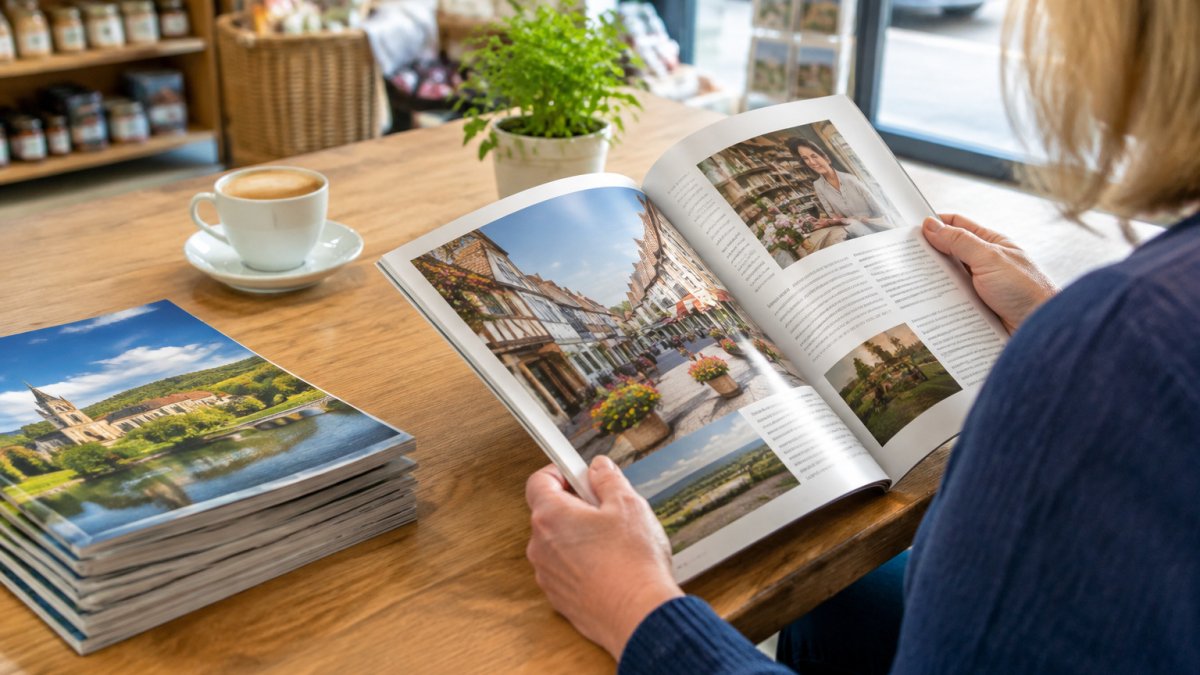
Community publications and local magazines can sit in the home for days or weeks, giving an advert more chances to be seen.
Print Advertising Examples from Neighbourhood Businesses
Good print advertising examples tend to share one trait: a clear local hook. A village bakery might run a magazine advert with a cut-out voucher. A garage could place a postcard drop reminding nearby streets about its services.
The pattern is simple. Name the neighbourhood, give a reason to act now, and make the offer easy to redeem.
How to Advertise Your Business Locally: A Step-by-Step Plan
Learning how to advertise your business locally comes down to a repeatable sequence: research your audience, choose formats, design the advert, plan distribution, and set up tracking before anything goes to print. Do them in order and you avoid the most common waste, printing too much, too soon, for the wrong streets.
Research your audience and neighbourhood
Choose formats and set a budget you can repeat
Design the advert around one clear offer
Plan distribution and timing
Set up tracking before the drop
Step 1: Research Your Audience and Neighbourhood
Start with the streets and villages you actually serve. A customer two miles away is worth more than one ten miles off.
Look at the character of each area: older households may read a community magazine cover to cover, while younger renters may respond better to a door drop with a QR code. Check that your chosen area is covered before you book anything. You can check our distribution areas to see whether your neighbourhood is included.
Watch out: choosing an area because it is affluent rather than because it is close to your premises usually wastes budget, convenience and familiarity drive local repeat custom more than postcode prestige.
Step 2: Choose Your Print Formats and Set a Budget
Match the format to the goal. Use flyers for a quick push, magazines for steady brand awareness, and postcards for reminders to existing customers. Set a budget you can repeat for at least three runs, because one drop rarely tells the full story. Consider how the budget splits between design and artwork, printing, and distribution or placement.
For current costs, you can view our advertising rates and request a quote.
Step 3: Design the Advert Around One Clear Offer
Keep the design plain. One headline, one offer, one clear way to respond. A common mistake is cramming in five messages. Readers skim, so give them one reason to call.
Include your business name, a recognisable local detail such as the street or village, and a deadline if the offer is time-limited. If you are placing an advert in a community magazine, ask the publication for its artwork specifications and deadline well in advance, as sizes and print schedules vary between titles.
Step 4: Plan Distribution and Timing
Plan when the drop lands, ideally just before your offer starts so the advert is still fresh when the reader acts. For door drops, confirm the delivery area and expected delivery window with your distributor. For magazine placements, work back from the publication date and book early to secure the position you want.
Watch out: delivering in heavy rain or on bin collection day reduces the number of leaflets that actually reach a kitchen table, ask your distributor how they handle weather and timing.
Step 5: Set Up Tracking Before the Drop
Before anything is printed, decide how you will know whether it worked. Give each advert a unique voucher code, a dedicated phone number, or a simple "mention this advert" line, and brief staff to log every response. This step is easy to skip, but without it you cannot compare one run against the next. The next section explains how to turn those responses into simple cost-per-lead and return figures.
What Print Advertising Costs and How to Budget
Print advertising costs depend on format, size, print run and distribution area. Pricing varies by quantity, dates and delivery, so ask for a quote. Visit the Grapevine Publications website for current prices.
Watch out for the costs that catch people out: design time, artwork changes, and reprints. It pays to know the costs small businesses miss in local print advertising before you commit. Budget for three runs and judge the results together.
Measuring Print Advertising Results Without Guesswork
Measuring print advertising results means giving each advert a way to be tracked. You cannot count clicks on paper, but you can count responses. The most reliable approach is to build tracking into the advert before it is printed, then compare responses across runs using a few simple calculations.
Tracking methods that work for print
Unique voucher codes. Give each advert or drop its own code, such as BAKERYSPRING or GARAGE24, so you can tell which piece prompted the visit. Brief staff to record the code on every redemption.
Dedicated phone numbers. A separate number for print campaigns lets you count calls, even if you forward them to your main line. Call-tracking services can log this automatically, or you can simply note calls on a sheet by the phone.
QR codes. A QR code linking to a campaign-specific page lets you count scans, but always print the web address alongside it for readers who prefer to type.
Offer codes and mention lines. A simple "mention this advert" line is free and surprisingly effective for local businesses, provided staff actually log it.
Customer surveys. Ask new customers how they heard about you at the till or on the phone. Over a few weeks, a short question gives you a rough but useful picture of which channels are working.
Simple calculations to judge each run
Once responses are logged, work out two figures for each campaign:
Cost per lead = total campaign cost divided by the number of responses. If a run cost a set amount and produced twenty enquiries, the cost per lead is that total divided by twenty.
Return on investment = (revenue from the campaign minus campaign cost) divided by campaign cost, expressed as a percentage. Use actual sales where you can, and a conservative estimate where you cannot.
Keep a simple log: date, area, format, responses, and revenue. After a few runs, patterns appear. The format that pulls best in one village may flop in another. That is useful, not a failure. It tells you where to put the next budget.
Testing before you commit
Before a large print run, test small. Print a limited quantity for one neighbourhood, or book a single advert in one title, and compare the response rate against a second area or format. Test one variable at a time, the headline, the offer, the format, or the distribution quantity, so you know what caused the difference. A common pattern is that a stronger offer lifts response more than a bigger print run.
Watch out: judging a campaign after a single drop usually misleads, because response often builds over repeat runs, give each format at least three outings before you decide.
Distribution Rules, Permissions and Sustainability in the UK
Door drops and leaflet distribution can be subject to local rules on where and how you deliver (Permission to distribute leaflets (England and Wales)). Check with your local council before dropping on streets, and respect "no junk mail" signs.
On sustainability, paper choices matter. Ask your publication or printer what stock and inks they use.
Booking Your First Community Publication Advert
Booking your first advert is simpler than most people expect. Pick your publication, choose your size, supply your artwork, and confirm the deadline. Most community magazines work to a print schedule, so book early to secure the spot you want.
If you are unsure which title fits your area, read how to choose a local community publication for your business first. Then match the readership to your customers.
Booking one advert and expecting instant sales can lead to disappointment, as print builds awareness over repeat runs.
The real challenge is not choosing between print and digital, it is reaching the right neighbours consistently.
Frequently Asked Questions
How much does print advertising cost for a small business?
Costs depend on the format, the publication, the advert size and how often you book. A small advert in a community magazine costs less than a half-page in a regional newspaper, and booking a series usually lowers the per-insert price. Leaflets and door drops are priced mainly by print quantity and delivery area. Ask each publication for its rate card and compare cost per thousand copies delivered rather than the headline price. Grapevine Publications can quote for its Worcestershire titles on request.
How can a local business measure the results of a print advert?
Give every channel its own response route. A dedicated phone number, a unique landing page or a quote code printed only in that publication lets you count enquiries back to the advert. Ask new customers how they found you at the till or on the phone, and log the answers for three months. Compare response rates across publications and issues, then move budget towards the ones that bring enquiries. Measuring print advertising results takes a little setup but turns guesswork into decisions.
Does print advertising still work when we already use Google and Facebook ads?
The two do different jobs. Digital advertising captures people already searching; print advertising in community publications puts your business in front of residents who are not looking yet. A household that sees your advert in a local magazine may not act for weeks, but the name is familiar when they do need you. Many local businesses run both: print for awareness in a defined neighbourhood, digital for tracking and conversion. Neither replaces the other.
What should a small business include in a print advert?
Lead with one clear offer or reason to contact you, not a list of everything you sell. Include your business name, a short line on what you do, the area you cover, a phone number and a website or quote code. Use a readable font size and high-contrast colours so the advert works for older readers. Add a deadline if the offer is time-limited. Keep the design consistent across issues so readers recognise you, and check the publication's artwork specifications before sending files.

Comments